• Skip to primary navigation
  • Skip to main content

Net Gain Marketing

Rambling about online business, marketing strategy and methods that create net gains, not net costs...

  • SEM/PPC
  • SEO
  • Contact
  • About Ken Thomas

Culture and Communication

Personal Stories Create Powerful Copywriting

Personal Stories Create Powerful Copywriting

Do your ads, websites, videos or newsletters seem too dull?

Are you sending messages that fall on deaf ears? 

Adding a personal story to your copywriting transforms it into something powerful.

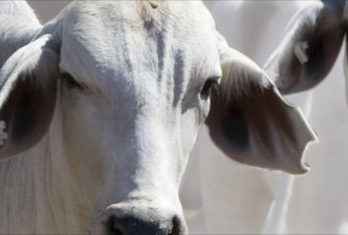
Cattle in live export issue
A name and a story helps your audience get involved with any topic.

Recently in Australia, media attention focussed on the plight of farm animals exported live to counties like Indonesia, where the animals are subjected to cruel treatment that is considered barbaric and illegal in western countries.

Live export has gone on for a long time, and animal rights activists have opposed it with little success. In May 2011, charity Animals Australia took video footage of what happens to these animals.

Then they did something very smart.  This is a lesson to anyone communicating anything important:

A personal story helps your audience relate to your message.

It is a simple concept and it can be done very quickly.  It is not easy to do it well.  Animals Australia did it very well when they introduced Brian.  In their video, we see a dark-brown steer standing wobbly on a slippery floor in a big room…

“It was hard not to fall in love with Brian.  He was a big, affable steer who was trying his best to keep out of trouble.”

This short, simple introduction gives a character to our subject and helps us relate to him.  Next we see the final minutes of Brian’s life unfold in an abbatoir supported by Australian Government investments.

Without the introduction, any sane person will find this video horrifying.

With the narrator’s introduction of Brian, the video evokes empathy that is almost unbearable for anyone who has compassion for living creatures.

The introduction places you in Brian’s shoes. It focuses you right down on the emotions of his situaton.  It highlights his fear and suffering.  As a viewer, you can’t remain detached from his story.

Cynics would say this is manipulative.  They’d say cattle don’t have names for a reason.

I’d say it is powerful communication.  And I’d say that Brian, suffering immoral abuse, deserved a name.

This is an example of an important communication and copywriting concept being used well, for a good cause.  Let me repeat it:

A personal story helps your audience relate to your message.

Every message can be made better by helping people relate on a personal level.

Every service has a personal experience.

Every issue has a personal impact.

Every product has a personal benefit or interest.

Find the personal story in what you write about.

Make it clear and snappy.  Whether you are writing about candy, candidates or caskets, adding personal to your message gives it the POWER it deserves.

Reference:

The video from Animals Australia is extremely disturbing.
Hopefully my description was clear enough.
I suggest you simply donate $30 to Animals Australia or your local SPCA and don’t watch the video.


Filed Under: Copywriting, Culture and Communication, Featured Tagged With: better copywriting, fundraising

Culture Rant: Cleaning the racism out of our language

Culture Rant: Cleaning the racism out of our language

Australians hold their unique, home-grown vocabulary very dear, and these are often perceived as being iconic parts of Aussie culture.

Sometimes Aussie language reflects greater ideas or ideals; the best example is “mate”. Mate is a flexible term, ranging in meaning from open, kind acceptance to insult . Mate is Aussie and, excepting its too-frequent use by politicians, it is a harmless, functional and often charming part of the language.

Other slang is less benign, though, and it is time to clean out the colloquial cupboard. Here is something that recently caught my attention:  A story in The Australian newspaper online titled “Windies to stand in if Pakis withdraw”.

Well.

Some Australians think “The Pakis” is an acceptable name for the Pakistani cricket team. “The Pakis” is used often by Aussie (and some other) cricket fans. Even Aussies who are not great adherents of cricket will often defend Paki as an ambiguous, non-toxic title.

Unfortunately the fact is that here, and in most of the world, the word Paki is also a negative, insulting racial slur.

The Cambridge Dictionary is clear about this.

Paki
noun [C] OFFENSIVE
a person from Pakistan

As a youngster growing up in Canada I heard the word Paki too often. Paki was a word of hatred and conflict. Paki was a word that meant a) people were going to throw down their woolly mittens and have a punch-up, or more often b) a kid with hued skin (quite often not from Pakistan) was about to be bullied, degraded, humiliated and insulted.

Paki , used as a racial slur, is not unique to youth or my Canadian origin; adults worldwide use the word. Saying Paki reveals their racism—and often their ignorance of national and cultural distinctions.

Aussies sometimes consider non-Aussie examples of language, or even foreign dictionaries, as irrelevant for being ignorant of Australian culture and language; no trouble — the Macquarie Dictionary is clear enough as well.

Paki
noun 1. (Often offensive) a Pakistani. —phrase 2. the Pakis, the Pakistani Test Cricket team.

When a point like this is raised many people who are in the cultural majority quickly reply “who, ME, racist?” Mainstream editorials refer to “pointless political correctness” and defensively list examples where the a minority group self-applies racist terms. People who think the word Paki is made benign because it has been spoken by Pakistani cricket players or fans should consider this: The word “nigger”, a term of equivalent stature to Paki but coined in reference to black Americans and their enslaved history, is used casually or ironically by some Arican-American people. Does this makes “nigger” an appropriate word for any white-skinned person to use? No.  Any white staff writers at The Australian who would answer “yes” should attend some professional sporting interviews and greet dark-skinned athletes with that term — face to face.

Paki is not a rare word in Australia. Sometimes its use is not intended to express racism or hatred. But in a headline broadcast across the country, to many people who don’t think it has a special ‘non-racist cricket-culture usage’, what does using the word paki represent?  At best: A wrong-minded devotion to yobbo sporting culture at the expense of more urgent values.  At worst: A sad reminder of the pervasive — yet pervasively denied — cracker backwardness that cowers beneath the culture of Australia and other western countries.

At the beach, people are equal. Australians are an inclusive bunch, but our language and slang includes some terrible racist history that needs to be eliminated. Thanks to 'Shot At Byron' for the photo.
Update on Saturday, August 9, 2008 at 10:15AM

Ironically, a range of articles published in The Australian agree that ‘Paki’ is an offensive term.

  • Here in an interesting article about offensive language;
  • Here in a review of Gautam Malkani’s book Londonstani – quote:

    “Gautam Malkani’s first offering begins with a scene of visceral violence: four young British Asians are pummelling a white kid for calling them “Pakis” – a word allowed only if you are on the inside (Can’t be callin someone a Paki less you also call’d a Paki, innit”).

And, interestingly, a search of the paper’s site reveals that offensive usage of Paki, including the sport article that orginally inspired my post, have now been removed.

Since writing this post I have noticed ‘Pakis’ seems to be used less frequently in the Australian media. I don’t think my post triggered this (although I hope letters I’ve sent to newspaper editors might have helped).

It intrigues me that this is the most visited post I’ve ever written.  Some of the comments people have left are terrifying, though, so I don’t publish any comments here.

Filed Under: Copywriting, Culture and Communication, Featured Tagged With: media racism, racist language

Copyright © 2026 Net Gain Marketing

  • SEM/PPC
  • SEO
  • Contact
  • About Ken Thomas